Press release
Beyond 2030: Do We Need New Development Goals, or a Better Way to Deliver the Ones We Have?
DTC Press Release Distribution Network · 22 November 2026
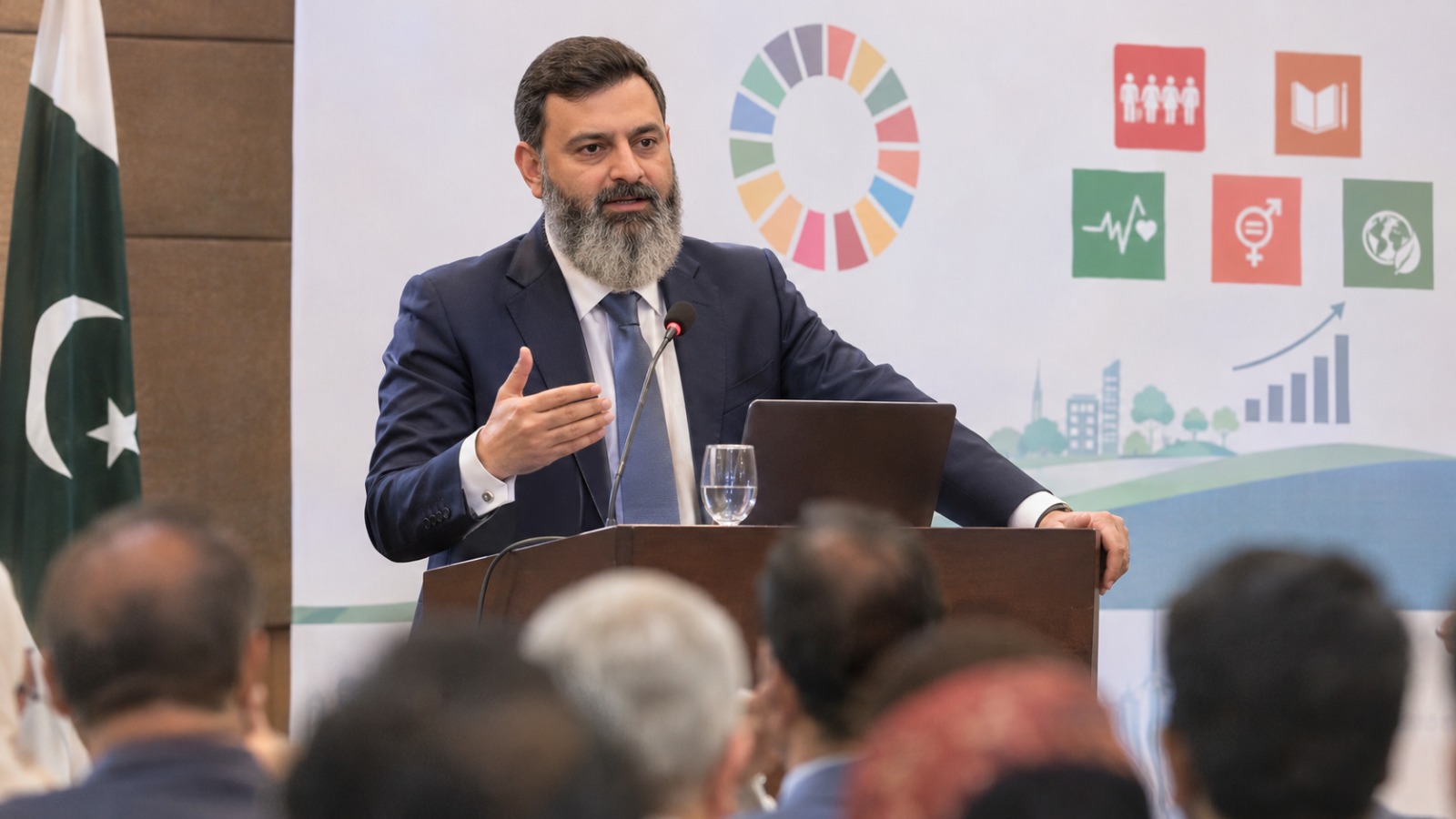
By Nazakat Hussain
As the world approaches the 2030 deadline for the Sustainable Development Goals (SDGs), an important question deserves serious consideration: what happens when the goals we collectively committed to achieve remain largely unmet? Do we need an entirely new development agenda after 2030, or should we first understand why existing commitments have fallen short and focus on delivering what we have already promised?
Adopted in 2015, the SDGs set an ambitious vision of ending poverty, ensuring quality education and healthcare, reducing inequalities, promoting gender equality and protecting the environment. Yet, despite progress in some areas, the distance between these promises and people's everyday realities remains considerable. The United Nations' 2026 SDG progress assessment highlights that progress is uneven and insufficient, with many targets either advancing too slowly or moving backwards.
The problem is not necessarily the goals themselves. It is how we pursue them.
Over the years, development has not been short of policies, strategies or international commitments. What has often been missing is consistent financing, institutional capacity, coordination and accountability. Political priorities change with governments, while development requires continuity. Policies are announced without adequate budgets or clear implementation plans. Government departments often work in isolation, even when the challenges they address are interconnected. Monitoring also tends to focus on activities completed and funds spent rather than the actual improvements in people's lives.
External challenges, including the COVID-19 pandemic, economic instability, conflicts and climate-related disasters, have further slowed progress. However, these challenges also expose weaknesses in development systems, particularly their inability to protect existing gains and support vulnerable communities during crises.
There is certainly a need for a post-2030 development framework. Climate change, digital transformation, artificial intelligence, migration and changing labour markets have created new realities that future development priorities must address. However, introducing another set of goals without examining the shortcomings of the current framework risks repeating the same cycle of ambitious promises and limited results.
Before setting new targets, the world must honestly assess what worked, what failed and why. Which policies delivered measurable improvements? Which programmes remained limited to pilot projects? Why were successful initiatives not sustained or expanded? Where did financing and implementation fall short? And who was held accountable when commitments were not fulfilled?
The post-2030 agenda should build on the lessons of the SDGs, not simply replace them. Proven interventions must be strengthened and scaled up, while ineffective approaches should be reconsidered. Continuity and innovation must go hand in hand.
For Pakistan, this is an opportunity to move beyond adopting global commitments and build a development system that delivers measurable improvements in people's lives. Persistent challenges in education, healthcare, poverty, gender equality, employment, social protection and climate resilience cannot be addressed through isolated projects or short-term initiatives. They require sustained public investment, coordinated policies and long-term planning.
Public financing must reflect national development priorities. Education and healthcare need consistent investment, while social protection systems must reach vulnerable households and respond to changing economic realities. Domestic resource mobilisation, fair taxation and more effective public spending are essential to achieving these objectives.
Equally important, successful programmes should not be discontinued simply because a project cycle or funding arrangement has ended. If an initiative is producing positive results, the priority should be to assess its effectiveness, address implementation gaps and explore how it can be sustained or expanded. Development gains should become part of public systems rather than disappear when external support ends.
Pakistan must also rethink how it measures progress. Enrolment figures alone do not guarantee quality education. The number of training programmes does not necessarily translate into decent employment. Similarly, policies promoting gender equality do not automatically ensure equal opportunities for women. Accountability must focus on real outcomes: whether children are learning, women are accessing employment, vulnerable families are protected and communities are becoming more resilient.
Most importantly, people must have a meaningful role in shaping development priorities. Women, young people, persons with disabilities, workers, minorities and communities living in poverty should not be treated merely as recipients of assistance. Their experiences and perspectives must inform policies, resource allocation and the solutions designed to address their challenges.
These questions were also reflected in the November 2026 dialogue, Building Inclusive Narratives for Real Transformation: An Early Warning on a Post-2030 Agenda, organised by Awaz CDS, which I had the opportunity to attend. The discussion highlighted the importance of looking beyond institutional commitments and placing people's lived experiences at the centre of future development planning.
The approaching 2030 deadline should not simply mark the end of one international framework and the beginning of another. It should be a moment of reflection, learning and correction. The world does not need to abandon the vision of sustainable development; it needs to become more serious about achieving it.
A new agenda may be necessary to address emerging challenges, but it must not become an excuse to move on from unfinished responsibilities. Before making new promises, we must demonstrate the ability to fulfil existing commitments. For Pakistan, doing better means ensuring continuity in development policies, directing resources towards those who need them most, sustaining successful initiatives and holding institutions accountable for results.
Ultimately, development should not be judged by the number of goals adopted, policies announced or declarations signed. It should be measured by whether children receive quality education, families access essential services, women enjoy equal opportunities, workers earn decent livelihoods and vulnerable communities live with dignity and security.
The real challenge beyond 2030 is not simply to imagine a new development agenda. It is to learn from the past, correct what went wrong and make sustainable development a reality in people's lives.
The writer, a media and development communications professional, is the CEO of Digital Time Communications