Press release
Pakistan's Diabetes Crisis Deepens: Civil Society Calls for an End to Conflicts of Interest in Food Standards
DTC Press Release Distribution Network · 13 November 2026
Islamabad, November 14, 2026:
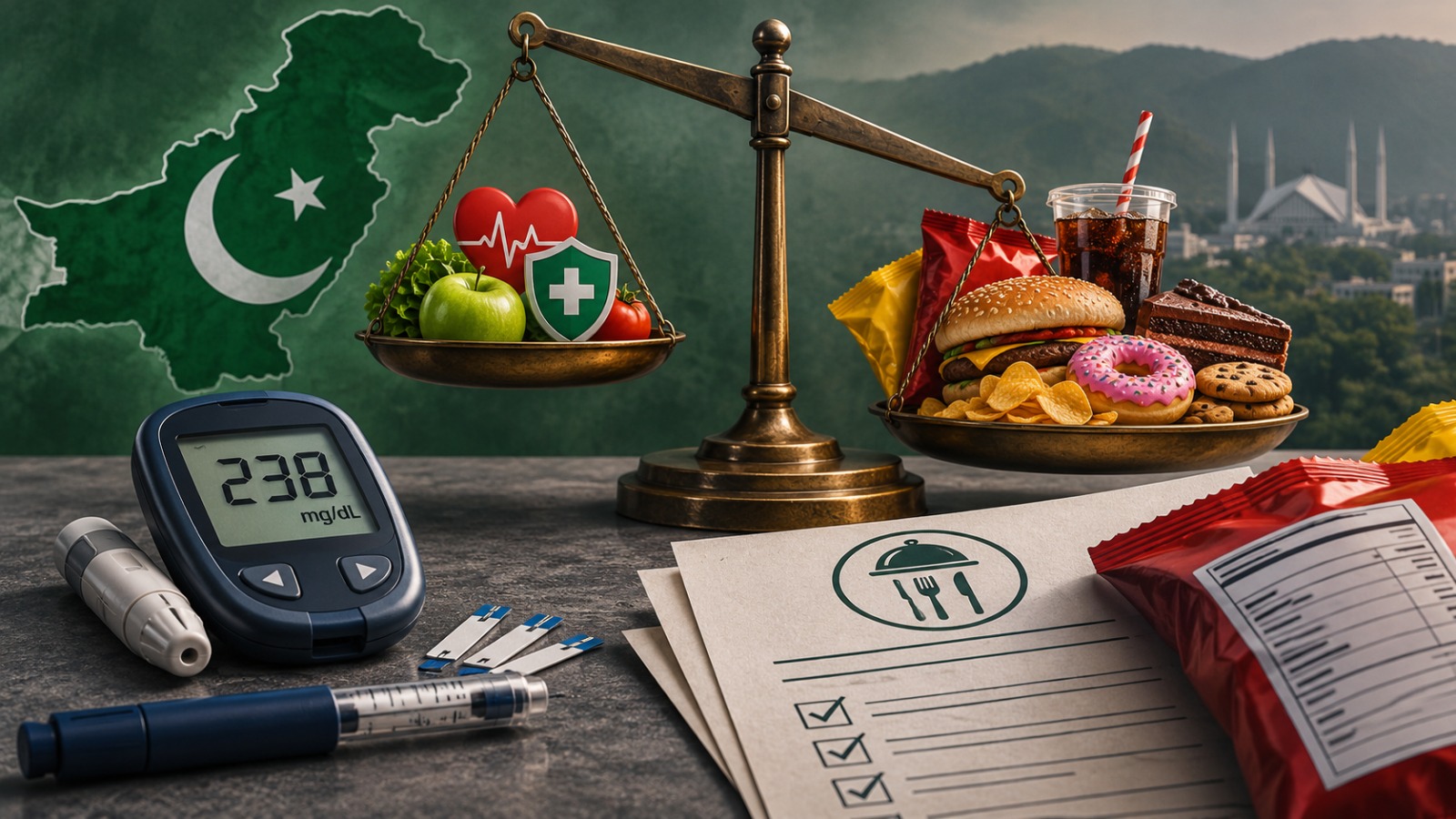
On World Diabetes Day, the civil society under the platform of TRANSFORM Pakistan calls for urgent action to eliminate partial hydrogenation from food supply, introduce clear food warning labels, and protect public-health policies and food standards making processes free from conflicts of interest. On the occasion of World Diabetes Day, civil society organizations of Pakistan have called for decisive government action to ban partially hydrogenated oils (PHOs), a major source of industrially produced trans-fatty acids (iTFAs), from Pakistan's food supply. Civil society organizations stressed that creating healthier food environments must be an integral part of the country’s efforts to address its escalating diabetes burden. They raised serious concerns about the presence of food and beverage industry and their front groups on Pakistan Standards and Quality Control Authority’s food standard-setting committees, warning that such involvement creates conflicts of interest, undermines the development of robust public health standards, and causes unnecessary delays in the standard-setting processes. Led by Pakistan Youth Change Advocates (PYCA), the TRANSFORM Pakistan campaign is supported by civil society organisations, including the Centre for Peace and Development Initiatives (CPDI), Pakistan National Heart Association (PANAH), Heartfile and several other credible organizations working to safeguard public health, environment, and human rights in Pakistan. According to the International Diabetes Federation (IDF), an estimated 35 million adults in Pakistan were living with diabetes in 2025, placing the country among those with the highest diabetes prevalence rates globally. Nearly one in three Pakistani adults is affected by the condition. Without urgent and effective policy action, this figure is projected to reach 70 million by 2050. Beyond its devastating health consequences, the diabetes crisis is also imposing an enormous economic burden, with the annual cost of diabetes management in Pakistan exceeding US$2.6 billion. Mr. Munawar Hussain, Senior Health and Nutrition Policy Expert, said: "Pakistan’s diabetes crisis is not merely a healthcare or economic challenge; it demands an urgent action to transform the food environment that shapes people’s diets and everyday food choices. Prevention must begin with evidence-based, conflict-of-interest-free food policies and standards that reduce consumption of ingredients of public health concern in processed foods, including excessive salt, sugar, saturated fats, industrial trans fats, and non-sugar sweeteners." The civil society emphasised that Pakistan's 2025 national standards limiting iTFAs to less than 2% of total fat was an important milestone, but a comprehensive legislative ban on PHOs is needed to fast track and fully eliminate this major source of iTFAs from the food supply. Mr. Sanaullah Ghumman, Secretary General at Pakistan National Heart Association said: "Consumers have a right to know what is in the food they buy. Front-of-Pack Warning Labels can make excessive levels of sugar, salt, and unhealthy fats visible, helping people make informed choices and supporting efforts to prevent diabetes and other chronic diseases. These labels must be mandatory, clear, easy to understand, and based on independent scientific evidence." Dr. Saba Amjad, CEO Heartfile added: "Consumers cannot be expected to bear the entire responsibility for preventing diabetes while the food environment continues to expose them to unhealthy products. Decisive policy action is urgently needed. We cannot afford to wait while preventable diseases and deaths continue to rise." Areebah Shahid, Executive Director, PYCA said: "Public health policies must not be influenced by the commercial interests of the very food and beverage industries they are intended to regulate. Decisions on food standards and the elimination of partially hydrogenated oils (PHOs) must be transparent, evidence-based, and protected by robust conflict-of-interest safeguards. Public health must always take precedence over the commercial interests." Mukhtar Ahmed Ali, Executive Director, CPDI said: "Pakistan urgently needs robust standards and regulations to address dietary risk factors related to diabetes and other NCDs. In this regard, it is crucial to establish regulatory mechanisms that ensure input of civil society and public health experts, and address conflict of interest situations, especially when certain interest groups motivated by profit considerations are engaged in expensive campaigns to influence policies, standards and consumer choices." Civil society organizations urged federal and provincial governments, food regulatory authorities to advance comprehensive legislation to ban PHOs, introduce mandatory front-of-pack warning labels on processed foods containing excessive levels of salt, sugar or saturated fats, or any amount of non-sugar sweeteners, and strengthen conflict-of-interest safeguards to ensure that all decisions affecting Pakistan’s food supply are made in the public interest. Public health must come before private commercial interests.